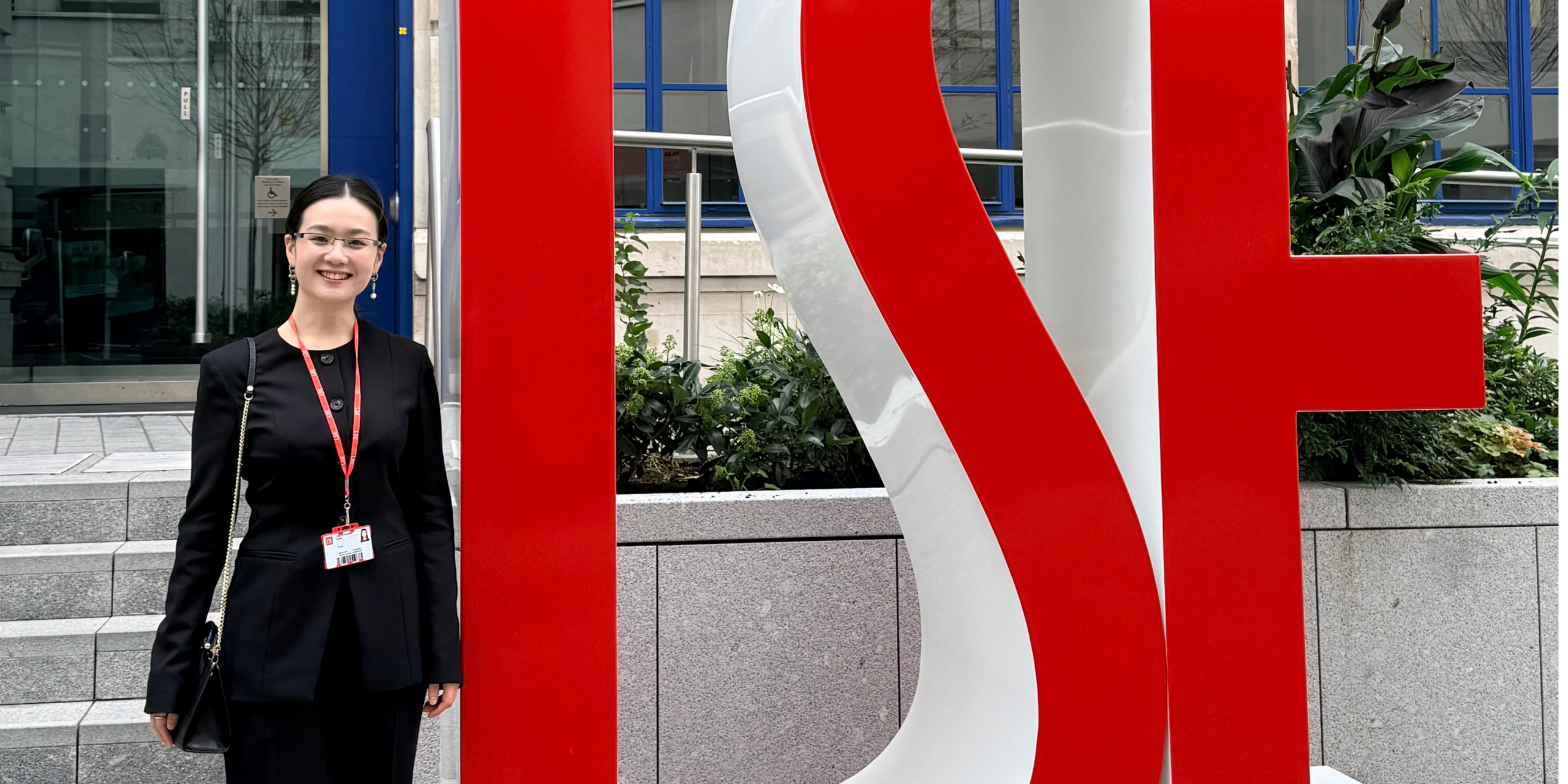
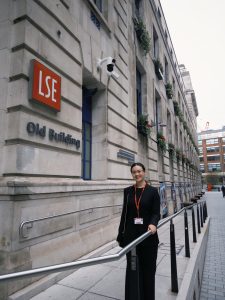
As a PhD candidate in political science, and a Chevening LSE Global Impact Fellow at the Department of International Development, Shuai researches the political economy of the global energy transition. Her work explores how disruptions in fossil fuel markets can shape renewable energy investment and policy across different contexts.
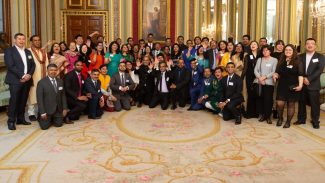
During her fellowship at LSE, she had the opportunity to engage with new perspectives, develop professional connections, and reflect on how her research could contribute to the wider conversations about energy and development.
The fellowship was not simply an extension of my PhD. It was an opportunity to step back, reflect, and see my work from new angles.
Expanding her perspective through global exchange
Once she started her journey, Shuai found that the fellowship offered the opportunity to look beyond her immediate area of expertise and engage with people, ideas, and approaches that challenged her existing perspective.
She had the opportunity to engage with both China’s and the UK’s perspectives and reflect on how knowledge from different contexts can inform global discussions on energy governance. China plays a significant role in renewable energy investment and infrastructure worldwide, while the UK has long-standing expertise in development studies and climate policy. Bringing these perspectives together has strengthened Shuai’s interest in producing research that contributes to policy conversations across institutional and national boundaries.
The fellowship has equipped me with analytical tools and professional networks that I hope will support that goal.
Building the skills to lead across borders
For Shuai, the fellowship has also reinforced the importance of skills that extend beyond academic expertise.
She identified three qualities she believes will be particularly important for future leaders in development research: the ability to work across disciplines, a willingness to reconsider their assumptions when new evidence or perspectives emerge, and strong cross-cultural communication.
These are practical habits I began developing during my fellowship and continue to practice in my daily work, and I have seen how these competencies can make research more robust and more widely applicable.
Advice to aspiring Chevening fellows
Her advice to other PhD students and early-career researchers is to make the most of that opportunity.
Do not treat it as a productivity exercise.
It is tempting to focus narrowly on your own project and attend only sessions directly related to your research. Instead, Shuai encourages future fellows to resist that temptation. Attend seminars that seem irrelevant. Talk to people whose methods you do not understand. Ask questions that challenge your own thinking.
The fellowship is a rare opportunity to broaden your intellectual perspective. The papers will get written, but the perspective you gain will stay with you much longer.
Her final message to future fellows is simple: Trust that you have earned your place. Stay curious, stay open, and make the year count.
Find out more about the Chevening LSE Global Impact Fellowship!