From Chevening fellow to cyber security leader in India’s Ministry of Defence
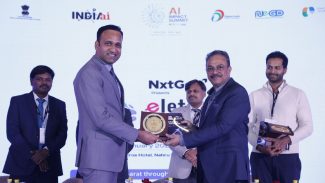
Chevening Fellow Vivek Yadav exemplifies leadership at the intersection of technology and national security


The future of cybersecurity won’t be defined by technology alone, but by the people who know how to navigate it.
 By 2030, cybersecurity and AI won’t just have evolved, they will have reshaped the rules entirely. The real divide won’t be between those who saw it coming and those who didn’t, but between those who adapted and those who stood still.
We asked Vivek Yavad, a #Chevening alumnus and one of India’s leading cybersecurity voices, what today’s young professionals should be focusing on now.
Tomorrow’s leaders will need to move comfortably between code and conversation. They will need to understand complex systems, while also explaining their risks and implications to policymakers, business leaders and the public. Technical knowledge alone won’t be enough; translation will be just as valuable.
The most effective defenders don’t just build systems, they interrogate them. They ask how things fail, where they break, and how they might be exploited. In practice, that means thinking like an attacker in order to stay ahead of one.
Post-quantum cryptography is no longer a future concern. It is an active planning requirement. Every technology leader today needs to understand the timeline of quantum computing development and what it means for the encryption their organisations depend upon.
AI and automation will increasingly place technology professionals in complex ethical situations. Leaders with principled frameworks for navigating those situations, and the confidence to act on them even when institutional pressures push the other way, will be indispensable. The ability to make principled decisions, and stand by them, will be critical.
Cyber threats don’t respect borders. The ability to collaborate across cultures, institutions and political contexts is no longer optional, it’s a core professional skill in a globally connected threat landscape.

One of the largest transitions in cybersecurity history is already underway. Organisations preparing now will be positioned for resilience; those waiting will face a crisis. The mathematical foundations of modern public-key cryptography will be rendered insufficient by cryptographically relevant quantum computers, and the time to begin building migration roadmaps is now, not when the threat is fully materialised.
This is not a future scenario — it’s happening now. AI is already being used to automate reconnaissance, identify vulnerabilities faster, and craft highly convincing phishing attacks tailored to individuals. The defensive playbook of the past decade still matters, but it is no longer sufficient on its own.
Technology is no longer just technical — it’s geopolitical. Countries are making deliberate choices about where data is stored, which hardware powers their systems, and who they trust with critical infrastructure. For cybersecurity professionals, understanding these dynamics is becoming as important as understanding the technology itself.
Chevening Fellow Vivek Yadav exemplifies leadership at the intersection of technology and national security

Applications for the Chevening Western Balkans Cyber Security Fellowship are open until 6 March 2024. University professor Angelina Stanojoska shares her experience on the programme.

‘As the window to act on climate change closes, all sustainability professionals are focused on rapidly shifting from ambition to implementation. The next generation of leaders must navigate complex regulation, harness new technologies and, crucially, make a compelling financial case for climate action.' - Richard Rugg, Deputy CEO