If you’re passionate about addressing global challenges and amplifying the voices of underrepresented communities, studying a master’s in human rights at a leading UK university could be the stepping stone you need to turn your ideas into action.
With a Chevening Scholarship, you can choose to study any Chevening-eligible master’s course in the UK. But here are three master’s courses our current Chevening scholars recommend that will help you to make a meaningful impact in the human rights field.
This one-year master’s degree from Birkbeck, University of London is designed for students who want to explore the relationship between law and human rights in a global context. The course combines legal theory, interdisciplinary perspectives, and critical analysis to help you understand how human rights are developed, protected, and challenged across different legal and political systems.
Chevening scholar Baueri Irata shares how this course will help him to make a positive impact back home.
‘By combining academic rigour with practical experience, I aspire to contribute to the development of policies and initiatives that promote justice, accountability, and the rule of law. I chose Birkbeck because of its strong reputation for academic excellence and its focus on flexible, research-driven learning.
‘The LLM program integrates theoretical frameworks with practical application, equipping me with tools directly relevant to my professional goals. I’m particularly drawn to Birkbeck’s evening classes, which suit my personal circumstances, as my wife and children currently reside in New Zealand. Attending classes at night allows me to maintain quality daytime contact with my family, ensuring I can balance intensive study with personal responsibilities. This flexibility makes Birkbeck uniquely suited to my professional and personal needs.
‘Upon completing my studies, I plan to return to Tuvalu and apply the skills and knowledge gained to strengthen legal frameworks, enhance public legal services, and drive policy reforms. My long-term vision is to foster a more equitable, accountable, and sustainable society through impactful legal and governance initiatives.’

This one-year master’s degree from the University of Leicester is designed for students who want to develop a deeper understanding of how international human rights law responds to global challenges. The course combines legal theory, policy analysis, and interdisciplinary perspectives to help you explore the principles underpinning human rights, while building the skills to analyse, interpret, and apply the law in complex real-world contexts.
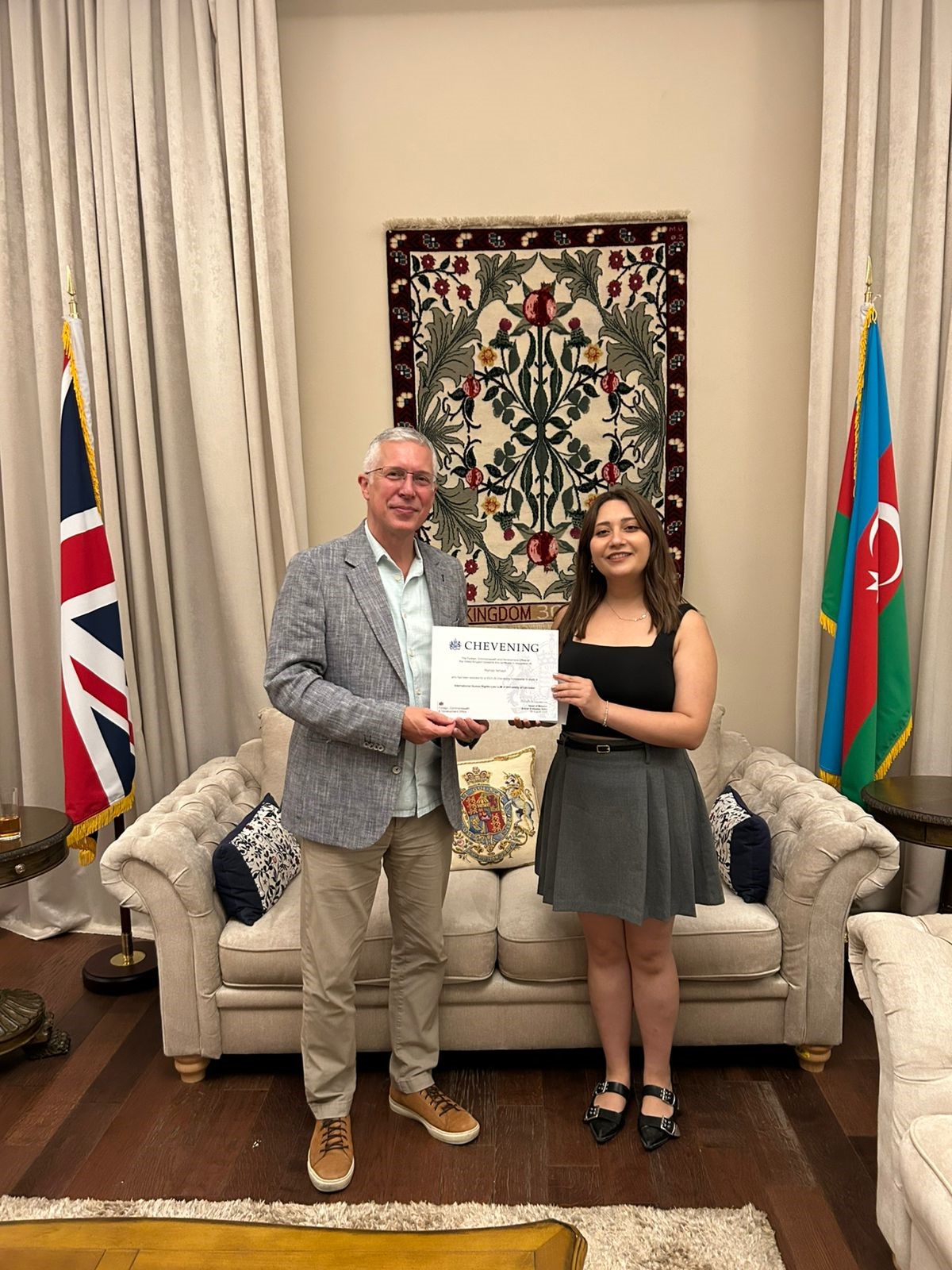
Chevening scholar Humay Ismayil tells us more.
‘I chose to pursue a Master’s in International Human Rights Law at the University of Leicester because, for me, the most important thing was not the ranking, but the university’s reputation, academic quality, and what I could gain from studying there. After researching the programme and faculty, I saw that Leicester offers a strong learning environment for human rights studies. It was also clear to me that the university is very research-focused, which is important for my academic and professional development.
‘What makes Leicester unique is its supportive environment. From the beginning, the staff were friendly, responsive, and helpful. I felt that student problems are handled efficiently through a well-organised system, which made me feel comfortable and valued.
‘This course is helping me build strong research, writing, and critical thinking skills, which I will use in the future to contribute to human rights advocacy, education, and positive social impact.’
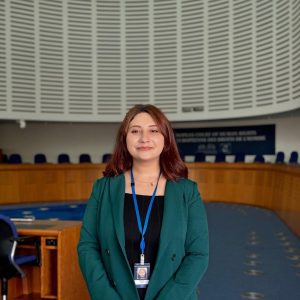
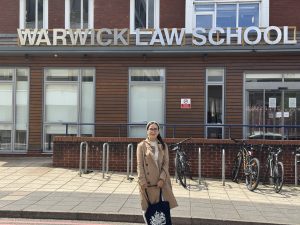
This one-year master’s degree from the University of Warwick is designed for students who want to examine the relationship between development, human rights, and global justice with a particular focus on the global South. This course will challenge you to think differently as you examine how law fits into broader political, social, economic, and global contexts, particularly with regards to issues such as globalisation, economic regulation, climate justice, citizenship, gender justice, and social activism.
Chevening scholar Gundegmaa Altankhuyag explains why it was the right choice for her.
‘I chose to study International Development Law and Human Rights at the University of Warwick because I wanted to go beyond applying law in a purely technical way and engage more deeply with how it shapes people’s living experiences. As a practising lawyer and former human rights activist, I had seen both the power and limitations of legal frameworks in addressing these experiences.
‘What I liked most about Warwick was its ‘Law in Context’ approach, which encouraged critical thinking about law within broader social and political realities, and challenged whose voices are included in legal knowledge.
‘I believe this course has helped me become a more reflective practitioner, strengthening my ability to connect legal theory with real-world experiences and marginalised perspectives. In the long term, I hope to use this learning to contribute to more inclusive and responsive legal and policy work that promotes justice and amplifies underrepresented voices.’