 Chevening alumna Anila Yousuf has spent more than a decade leading community-driven efforts to improve education and wellbeing in Pishukan, a marginalised coastal district in Baluchistan.
As Headmistress of the Government Girls Higher Secondary School in Pishukan, she has worked to expand access to clean water, education, and safe spaces for women and girls.
Addressing barriers to education and wellbeing
Since 2013, Anila has worked at the grassroots to address the systemic barriers facing women and girls in her community.
‘While working in Pishukan, I realised how people were deprived of the basic necessities of life – clean drinking water, electricity, health facilities, and above all, education.’
Schools were struggling with shortages of infrastructure, textbooks, and teachers, especially in science and STEM subjects. At the same time, women and girls faced significant challenges related to water scarcity, poverty, and gender inequality within households. Many also had to travel long distances to school.
In response, Anila restarted secondary-level classes that had been suspended and worked with community members and the local district administration to arrange transport for girls to attend college in Gwadar city.
They became the first cohort of girls from Pishukan to continue their education beyond secondary school. The transport service remains in place today, and former students are now studying at universities across Pakistan.
Creating safe spaces for learning
As access to education improved, Anila recognised that learning also required safe and inclusive spaces beyond the classroom.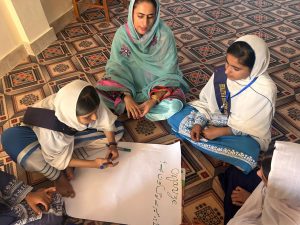
One of her most significant achievements has been the establishment of the first and only library for women and girls in the area. Created through a social-media-led book donation campaign, the library introduced girls to global perspectives through books and stories.
In a province with no public spaces for women, the library has become a vital centre for learning, study circles, and peer support. Run by a committee of schoolgirls, it now holds more than 3,000 books and is visited by around 50 girls each day.
Building on this momentum, Anila also founded the Pishukan Educational Foundation, with a focus on education, awareness and capacity-building for women and girls. Through peer-led sessions, the foundation addresses topics often considered taboo, including menstrual hygiene, reproductive health, nutrition, breast cancer awareness, and emotional wellbeing.
Strengthening leadership through Chevening
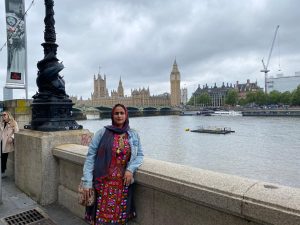 Anila says her Chevening experience was a turning point in strengthening her confidence, leadership, and ability to advocate for women.
‘Chevening was a game changer for me. It helped me rebuild my confidence, challenge my personal limitations, and see myself as a leader who would create change.’
Studying in the UK exposed her to new ways of thinking about inequality and education, while the global recognition of the Chevening Scholarship has helped her to attract support from organisaitons working on gender and education since returning to Pakistan.
Looking ahead
Anila now plans to launch an adult female literacy programme focused on gender equality, legal rights, health, and economic empowerment, ensuring women in her community are not only educated but equipped to lead lasting change.
She believes the initiative will have long-term benefits for women and the wider community, including improved health outcomes, reduced poverty, stronger civic engagement, and greater social justice.
Read more inspiring stories from our Chevening community.