
Building climate solutions with a Chevening Fellowship
Siddharth Sinha’s journey spans engineering, government, and technology, culminating in the Chevening CRISP Fellowship at Oxford.

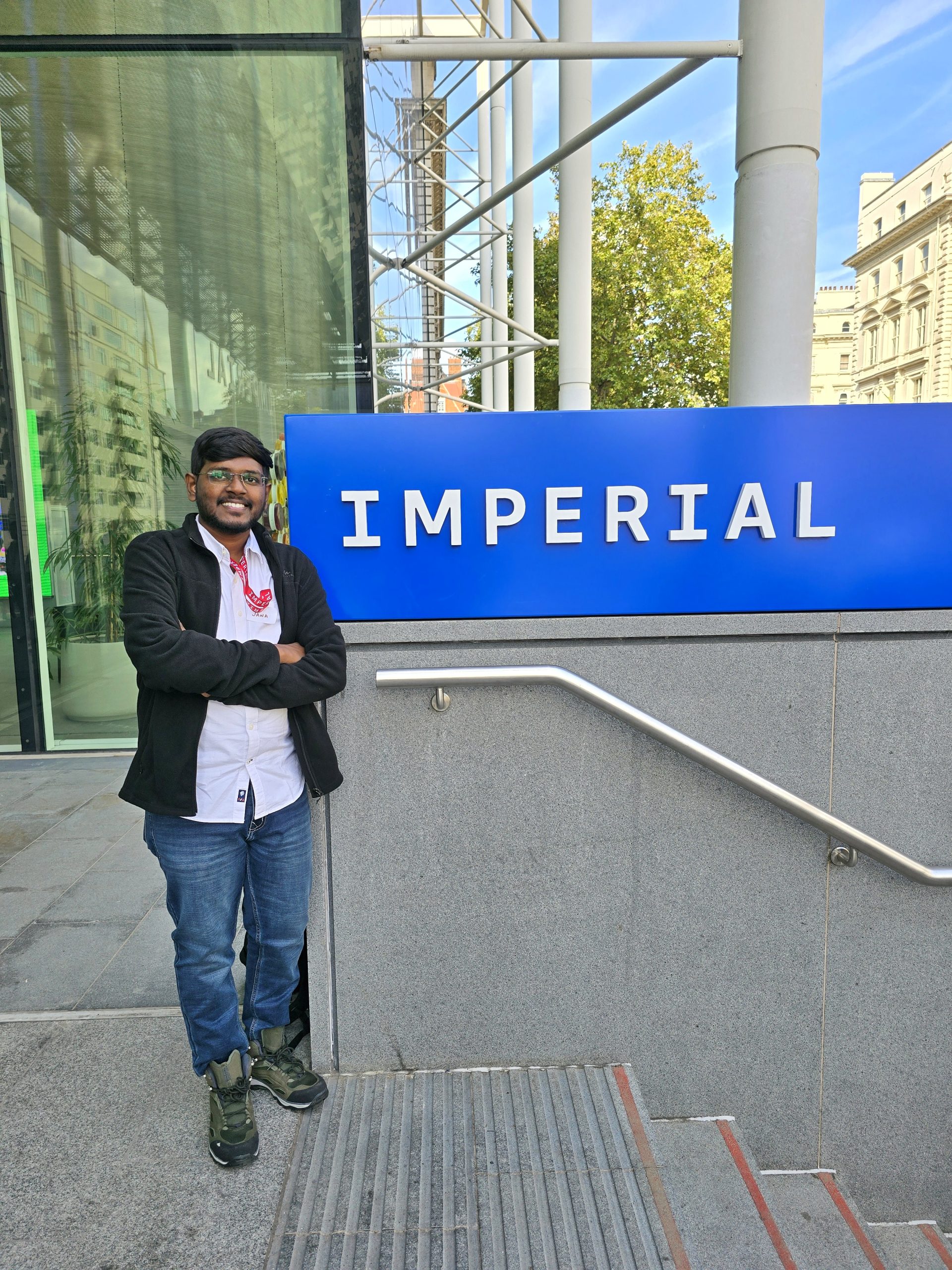
A Chevening Scholarship can help future leaders turn lived experience into scalable climate solutions. Discover how Janarthanan Venkatachalam is developing sustainable cooling technologies to address rising heat stress in vulnerable communities.
Janarthanan Venkatachalam, a Chevening Scholar co-funded by the Adani Group, is developing sustainable cooling technologies to address rising heat stress in vulnerable communities. His journey from public innovation work in India to studying at Imperial College London shows how Chevening supports future leaders turning climate challenges into scalable solutions.
Before his Chevening Scholarship, Janarthanan Venkatachalam worked as an Innovation Consultant with the Government of Tamil Nadu. Through public innovation projects, he saw first-hand how climate change was affecting communities and systems, particularly through rising heat stress.
Growing up in a small town in South India, he had already experienced how extreme heat could disrupt daily life and livelihoods. These early experiences, combined with his professional work, led him to focus on climate resilience and sustainable cooling solutions.
Today, he is developing sustainable cooling technologies to help communities adapt to a warming climate.
‘As temperatures continue to rise, heat is becoming one of the most significant challenges facing India, affecting public health, productivity, energy demand, and economic resilience. I realised that developing scalable and affordable cooling solutions would be critical for building climate resilience in the future.’
According to the state’s Heat Mitigation Strategy, Tamil Nadu could experience around 200–250 thermal discomfort days annually by 2050 if current trends continue.
Choosing to study in the UK with Chevening and The Adani Group
Co-funded by Chevening partner the Adani Group, Janarthanan chose to study in the UK because it offered a unique environment where engineering, entrepreneurship, investment, and climate policy came together to accelerate innovation.
‘For someone interested not only in inventing technologies but also in scaling them for impact, it was the ideal environment to learn and grow.’
He is currently studying an MSc in Cleantech Innovation at Imperial College London, combining engineering, entrepreneurship, and climate science to develop practical climate solutions.
Chevening community and mentorship
Outside the classroom, Janarthanan says one of the most valuable aspects of his Chevening journey has been the global community and mentorship work.
Through Chevening and Imperial College London, he has connected with founders, researchers, and innovators working in clean energy and climate resilience.
‘Through these conversations, I realised that the struggles, setbacks, and uncertainty I was experiencing were not unusual… that realisation gave me a new level of confidence. For the first time, I could see a path from where I started to where I wanted to go.’
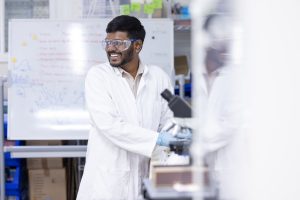
Creating sustainable cooling for climate resilience
Currently, Janarthanan is developing a bio-based passive cooling material that can be installed on existing roofs to reduce heat transfer into buildings. By lowering indoor temperatures without using electricity, the material aims to make cooling more accessible, affordable, and sustainable for communities facing rising heat stress.
‘Rather than relying solely on air conditioning, our approach seeks to create a passive cooling insolation solution. We aim to improve thermal comfort while reducing cooling demand and energy consumption.’
Looking ahead
Looking forward, Janarthanan hopes to bring these solutions back to India, where rising temperatures are driving urgent demand for sustainable cooling solutions.
Alongside developing climate resilience solutions, Janarthanan hopes to use his experience to support future generations of innovators.
‘I hope to use the knowledge, networks and experience gained through Chevening and Imperial College London to support the next generation of climate innovators.’
Through innovation, collaboration, and the networks he has build through Chevening, his long-term vision is to help make sustainable cooling more accessible to communities most affected by rising heat, while reducing environmental impact through scalable, low-energy solutions.

Siddharth Sinha’s journey spans engineering, government, and technology, culminating in the Chevening CRISP Fellowship at Oxford.

Boost your entrepreneurial skills with five free online courses to turn ideas into impact.

For Chevening scholar Ahmed, construction has always been about more than buildings and roads, it's about people. We find out how he's applying his UK experience to build a more sustainable future.