Five free leadership courses for Chevening changemakers
These five free online courses offer practical strategies, expert insights, and real-world tools in leadership, resilience, change management, nonprofit impact, and entrepreneurial thinking

Before joining Chevening, Sofia Aroca advised Chile's Ministry of Finance on how nature is reflected in economic policy. Now, she is exploring new ways to help policymakers better understand environmental change and ensure that nature is valued as part of economic decision-making.
How can governments protect the environment while supporting economic growth?
Chevening scholar Sofia Aroca believes the answer starts with changing how we value nature.
Before receiving a Chevening Scholarship, co-funded by Chevening partner Anglo American, Sofia worked as an economist at Chile’s Ministry of Finance. Her work focused on helping government better understand how environmental issues can be reflected in economic decisions.
Over time, she became interested in the idea of natural capital, recognising that nature has value, even when that value is not reflected in traditional economic measures.
‘Nature was often treated as if it were free. Once I discovered the idea of natural capital, it gave a name to something I had been thinking about for years.’
This interest led Sofia to work across Chile’s public sector, including in Patagonia, helping bring environmental thinking into government policy.
For Sofia, studying in the UK was a chance to learn from the people and institutions shaping thinking in this field.
She completed an MSc at the London School of Economics and Political Science (LSE), where she explored how governments can better balance economic growth and environmental protection.
On her first day, she attended a lecture by Professor Partha Dasgupta, one of the leading voices in natural capital.
‘These are ideas I’ve spent years trying to develop back home in Chile, so studying in the UK felt like a unique opportunity.’
During her time studying in the UK with Chevening, she became more interested in how governments can make decisions that reflect not only financial value, but also people’s cultural and social connections to nature. That thinking continues to shape her work today.
One of Sofia’s proudest achievements has been leading Chile’s Natural Capital Committee, bringing together ministries and the Central Bank to improve how nature is considered in economic decision-making. This work was recognised through the Natural Capital Young Leaders Prize from Stanford University’s Natural Capital Project.
Alongside her studies, Sofia connected with other Chevening scholars working on environmental challenges around the world through the Chevening Sustainability Ambassadors network.
She says these conversations helped her test ideas, learn from different perspectives, and build relationships that she hopes will continue throughout her career.
Sofia’s goal is to help governments make better long-term decisions by improving how environmental change is understood and measured.
She is now exploring ways to connect science, economics, and policymaking so that protecting nature becomes part of development, not separate from it.
‘Change like this cannot happen alone. It depends on people working together across countries and sectors.’
These five free online courses offer practical strategies, expert insights, and real-world tools in leadership, resilience, change management, nonprofit impact, and entrepreneurial thinking
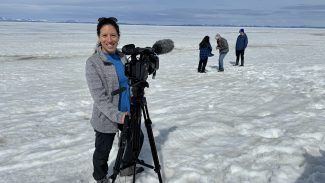
‘Documentary filmmaking transformed my approach to storytelling. Ultimately, Chevening revealed my true potential and demonstrated exactly what I am capable of achieving.’
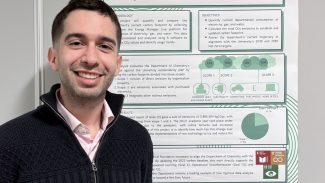
Chevening scholar Alfonso shares his plans to bring sustainability to the heart of Paraguay’s industrial sector through the skills he’s developing during his studies at the University of York.