
No child left behind: How a Chevening Fellow is transforming access to education in Nigeria
Discover how Chevening Fellow Dr. Tijjani Mukaddas is transforming access to education for children across Nigeria.
For Dr. Mukaddas, children being excluded from education is not simply a statistic. It is a problem that has shaped his work and fueled his determination to ensure every child has the opportunity to learn.
Around the world, more than 273 million children are estimated to be out of school, including 20 million in Nigeria. Among them are Almajiri children, who face significant barriers to entering, and remaining in, formal education. Dr. Mukaddas has spent his career developing a community-based approach to supporting these children, while also exploring ways to connect them with formal education. His goal is to develop locally grounded solutions, informed by evidence and scaled through education systems.
At the heart of this work is a simple belief:
No child should be excluded from education because of poverty, mobility, race, geography or their educational background.
Taking part in the Chevening Oxford Centre for Islamic Studies Fellowship gave Dr. Mukaddas the opportunity to expand the work he had been doing in this area, allowing him to connect research, evidence, and international experience with practical solutions for Nigeria.
Oxford insights; Nigerian solutions
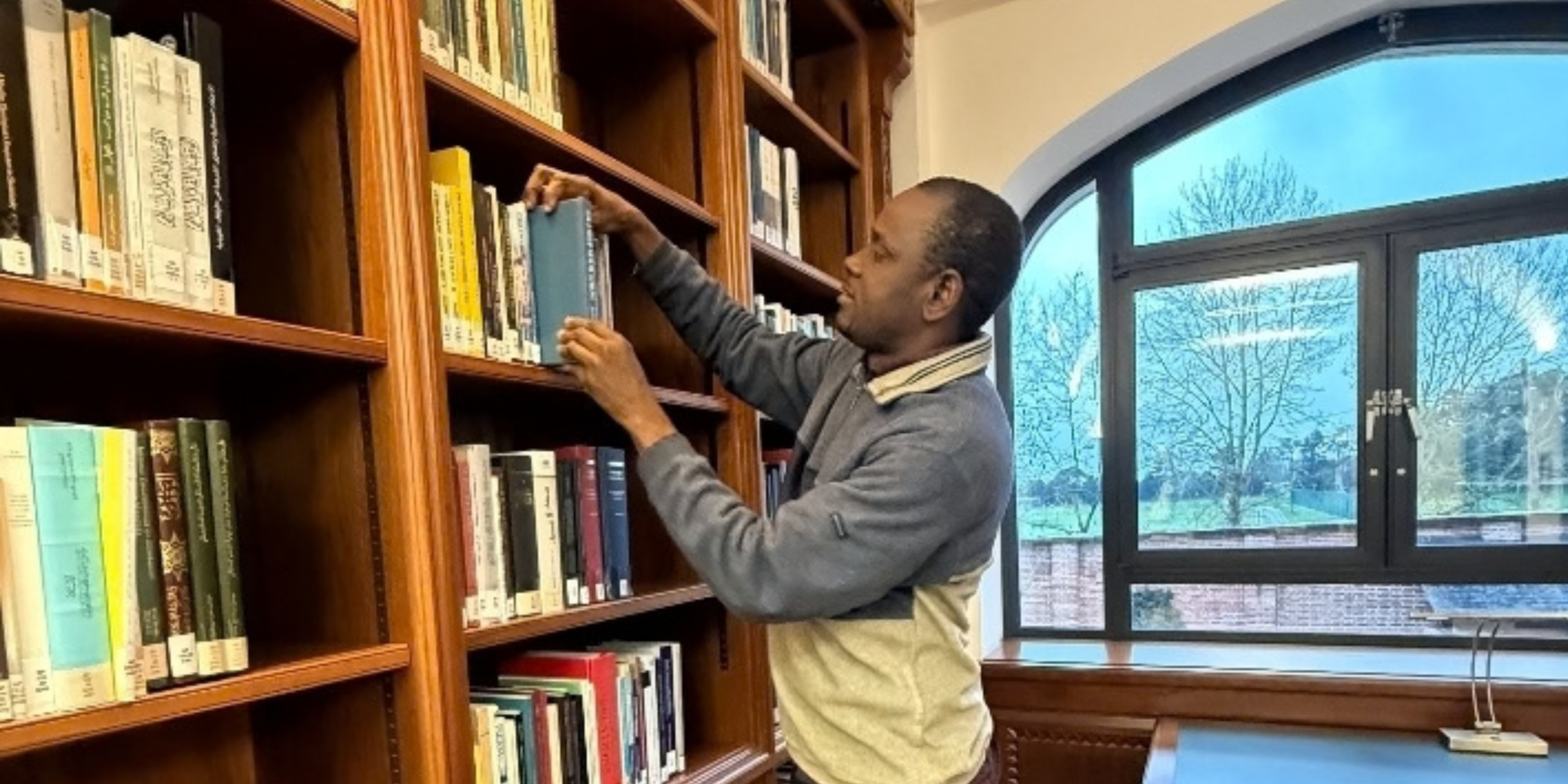
Dr. Mukaddas chose the Oxford Centre for Islamic Studies because he wanted to better understand the relationship between Islamic education, formal education, and the wider challenge of educational exclusion. During his Chevening Fellowship, he engaged with like-minded individuals, explored comparative perspectives, and benefited from the resources of the Bodleian Library.
Throughout the course of the programme, he studied how other countries have addressed similar challenges, particularly the integration of religious education with formal education. The fellowship helped him connect research and international experience with the realities of education in Nigeria. One of the outcomes was the development of the ‘Zero Out-of-School Children Initiative’, designed to prevent children from becoming permanently excluded from schooling.
Learn in the UK; lead at home
When Dr. Mukaddas returned to Nigeria, he was determined to put the knowledge and ideas he had gained into action. Within less than a week of arriving home, he began preparing the pilot of the ‘Zero Out-of-School Children Initiative’ and supported its implementation.

The pilot in Gandun Galadima, Jigawa State achieved a significant milestone: the community became the first in Nigeria to achieve zero out-of-school children status. The approach included community engagement, house-to-house identification and mapping of children, immediate enrolment, and the establishment of an Out-of-School Children Tracking and Response Centre to monitor children and respond to emerging risks.
Dr. Mukaddas also developed and implemented Makarantar Zana (the Hat School) to reach nomadic children in communities without conventional school infrastructure, using locally available resources and community participation.
The experience demonstrated that a community can make measurable progress against educational exclusion when evidence, community ownership, and committed leadership are combined.
The model has subsequently attracted government attention and has been replicated and scaled through national efforts. Dr. Mukaddas was appointed to a national leadership role supporting the implementation of the Zero Out-of-School Children Community Project.
Recognition beyond the classroom
Dr. Mukaddas’s work has also received international recognition. This year, he was selected as one of the Top 50 finalists for the Global Teacher Prize.
We can’t wait to see his impact continue to grow!