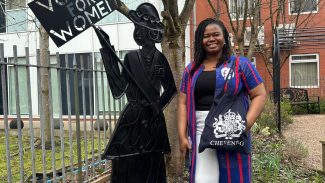
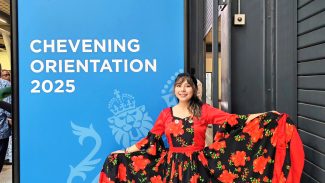
A commitment to climate conservation and international cooperation has always guided Han Chen’s academic and professional path. With a background in international organisations and NGOs that work across environmental and climate issues, Han was drawn to study in the UK for its global leadership in environmental governance.
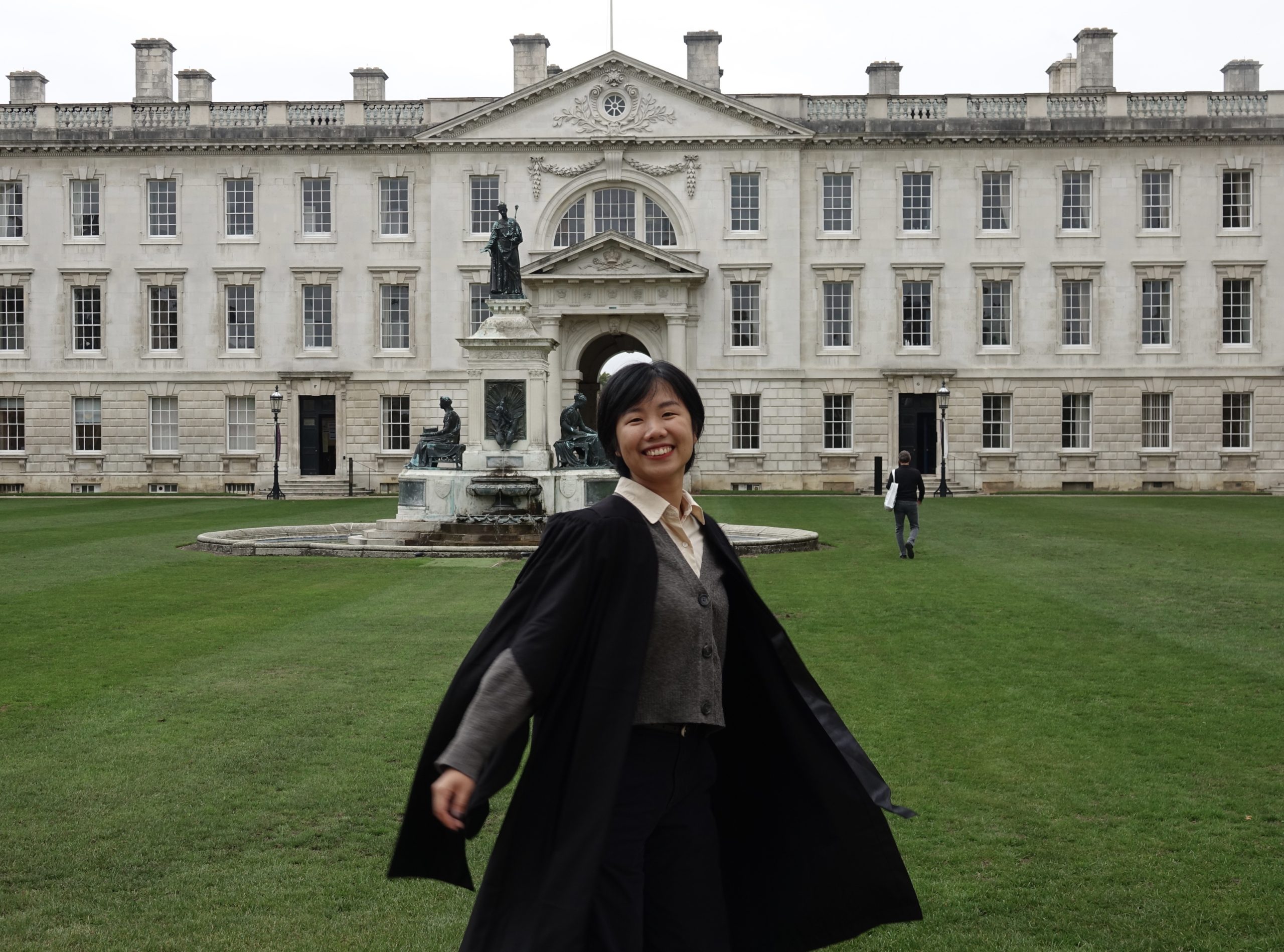
She is now completing an MSc in Conservation Leadership at the University of Cambridge.
‘I was particularly drawn to [study in the UK with Chevening] because of the opportunity to be part of a diverse, globally connected community committed to tackling shared challenges.’
Developing a new understanding of conservation leadership
For Han, studying in the UK with Chevening has transformed how she understands leadership.
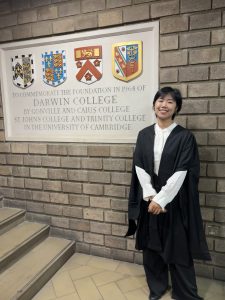
‘It’s not just a position, it’s a practice of navigating complexity, listening across differences, and building coalitions for change.’
Cambridge University’s Conservation Leadership programme considers power, governance, and inclusion as central to effective conservation. It also encourages scholars to come up with practical, forward-looking solutions, tasking them with real-world scenarios. One such scenario that Han worked on was an innovation consultancy project focused on shaping post-2030 development agendas in collaboration with an international organisation.
‘It was incredibly rewarding to see our ideas gain interest from stakeholders,’ Han explains.
Beyond her academic work, Han has taken on a leadership role within her college community, serving as Women’s Officer at Darwin College. In this role, she has championed gender inclusion and organised initiatives such as ‘Pink Week’, raising both funds and awareness for women’s causes.
Studying at Cambridge
Han describes Cambridge’s learning environment as both rigorous and deeply collaborative; it’s an environment where ideas are tested, challenged, and strengthened through open discussion.
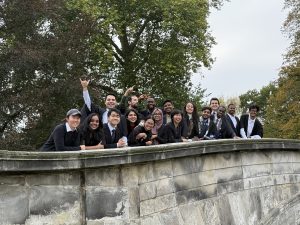
‘My peers, professors, and the wider community have created a space where I feel supported and inspired… My fellow students have challenged me, shared their experiences, and reminded me that I’m not alone in this work.
‘Together, we are building knowledge, exchanging ideas, and forging a lifelong network that is rare to find elsewhere.’
The value of the Chevening network
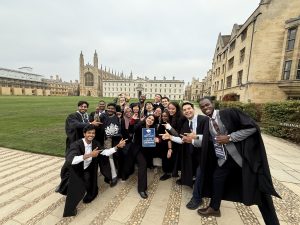
For Han, one of the most lasting aspects of her experience in the UK is the Chevening network itself.
‘It is a community that extends far beyond academic boundaries, bringing together individuals from diverse sectors, cultures, and experiences, all united by a shared commitment to positive change.
‘As I move forward in my career, I see the Chevening network as a vital ecosystem of support, inspiration, and collaboration.
Looking ahead
Upon returning to China, Han hopes to continue her work at the intersection of climate and biodiversity, with a particular focus on integrating gender perspectives into environmental decision-making. She is committed to ensuring that women’s voices and experiences are central to shaping policies and projects.
Han also hopes to contribute to a more coordinated and equitable global response to climate change and biodiversity loss, advancing approaches that bring environmental sustainability and social equity together, rather than treating them as separate challenges.
Through this work, Han aims to help shape a future where conservation leadership is not only effective, but inclusive, collaborative, and globally connected.