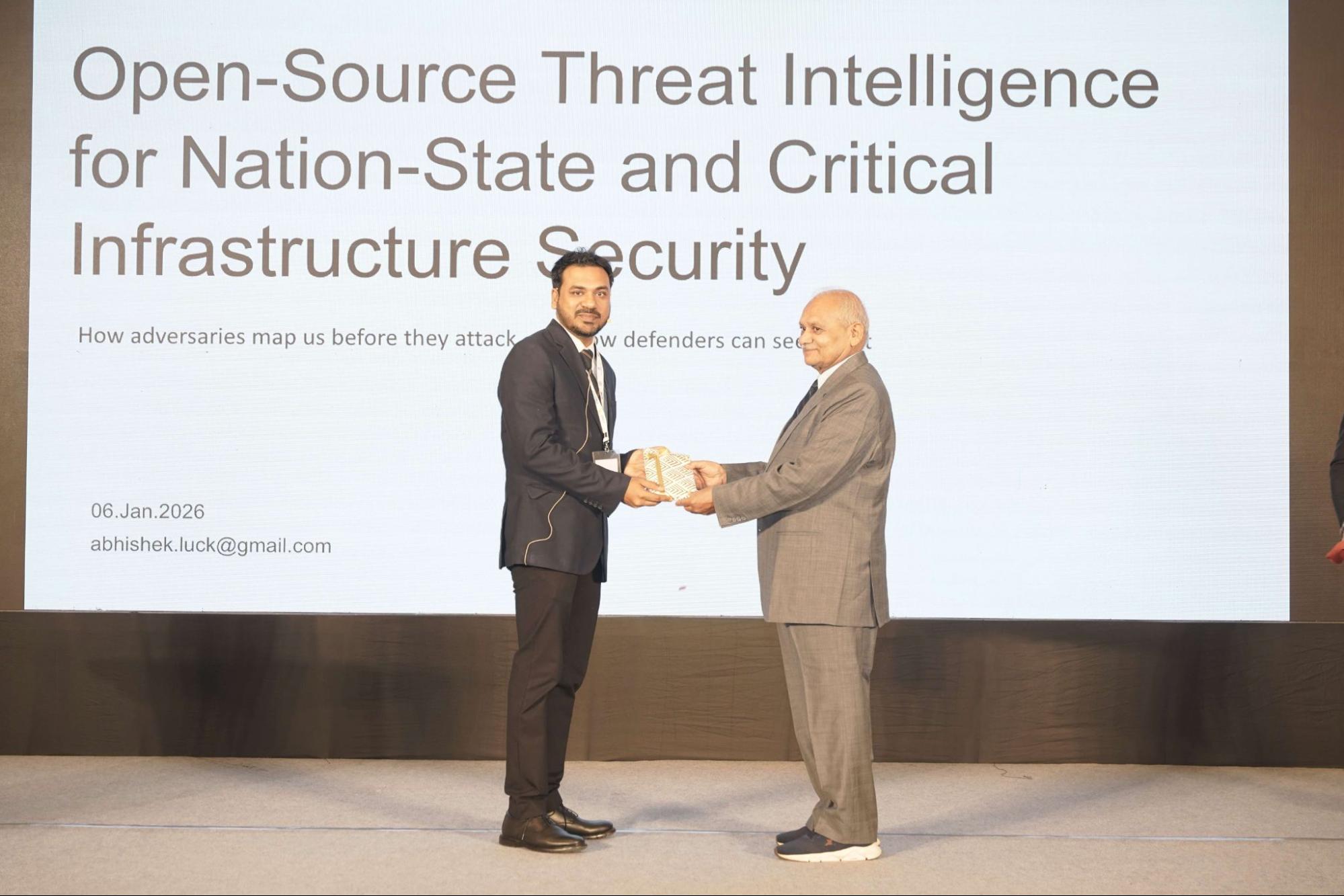
By Abhishek Kumar, Chevening Cyber Security Fellow (2024)
In fast-changing industries like technology, cyber security, and digital governance, many professionals begin with deep technical skills. This might mean writing code, investigating systems, or solving complex problems. But as careers progress, impact comes not just from expertise, but from the ability to lead, inspire, and bring people together.
Through my journey, from cyber investigations with the National Investigation Agency to leadership and global collaboration with technology companies, international partners, and academic institutions, I learned that evolution as a leader is intentional, reflective, and grounded in purpose.
1. Lead with purpose
Purpose gives direction not only to you but to the teams you lead. It transforms tasks into missions and technical outputs into organisational impact. When I reframed my work from solving technical problems to enabling safer digital spaces for citizens, I noticed my colleagues started aligning more naturally with that vision.
Purpose transforms everyday tasks into meaningful impact.
2. Make complexity simple
Technical fields are often complicated. Leaders stand out by taking complex ideas and making them understandable.
I learned early that leadership is not about using jargon to show expertise, but about explaining ideas simply without losing their meaning. When I began communicating cyber risks in a way that business leaders and policymakers could easily understand, I was invited into strategic conversations rather than being seen as ‘just the technical expert’.
3. Connect across disciplines
No challenge exists in isolation. Cybersecurity, technology governance, public policy, and global cooperation are deeply connected. The ability to work across sectors, cultures, and perspectives separates leaders from specialists.
During my Chevening Fellowship, working alongside peers from different sectors helped me combine technical knowledge with policy insight, ethical thinking, and cultural understanding. This approach helps create solutions that work across organisations and communities.
4. Understand people, not just problems
Technical skills can open doors but relationships keep them open. Leading teams, working with stakeholders, and influencing policy all depend on understanding people.
Often, the most valuable contribution I could make was listening carefully, acknowledging concerns, and building trust. Leadership is built on relationships: empathy, integrity, and trust matter as much as data.
5. Share what you know
One of the most rewarding parts of my journey has been teaching, mentoring, and sharing insights. Sharing knowledge helps others grow without having to start from scratch.
From guiding early-career investigators to collaborating with international peers, every conversation reinforced a simple truth: knowledge is most powerful when shared.
Key takeaway
Learning a skill is just the start. Turning that skill into leadership is where true impact lies. One piece of advice I would offer to fellow Cheveners? Lead with intention, learn with curiosity, and give generously of your knowledge and experience. The world needs leaders who are not just skilled but meaningful.
For more career support, visit our professional development page.
About the author

Abhishek Kumar is a cybersecurity and digital governance leader with over 16 years of experience spanning national security, global technology companies, and public policy. He currently serves as Director and Head of Information Security and Policy (India) at SpaceX – Starlink, where he leads regulatory strategy, information security governance, and engagement with government stakeholders.
Previously, Abhishek has held senior roles at Google, BNY Mellon, and Uber, and has served as a Consultant on Cyber Crimes with India’s National Investigation Agency (NIA), where he contributed to strengthening cyber investigation and open-source intelligence capabilities. A Chevening Cyber Security Fellow (2024), his work focuses on ethical intelligence, cyber resilience, and building responsible leadership at the intersection of technology, law, and public trust.